


Zoritxarrez, gaur egun, zerbikaleko osteokondrosiaren ondorioz, buruko mina eta lepoko minaren sintomak ezagunak dira ia heldu guztientzat. And in 70% of the population over 25 years of age (possibly earlier), such symptoms occur periodically. Doctors make a diagnosis: cervical osteochondrosis and prescribe treatment, depending on the stage and nature of the disease.
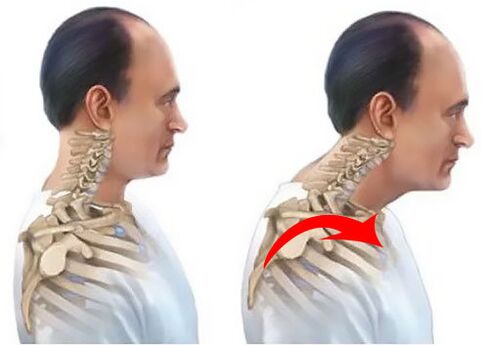
Zer da zerbikaleko osteokondrosia?
Bizkarrezur-zutabearen orno arteko diskoetan gertatzen diren aldaketa endekapenezkoak dira, bizkarrezurreko karga irregularrengatik gertatzen direnak. The vertebral bodies from the first to the seventh cervical region are gradually deformed, depleted and destroyed. Trápaga osteokondrosiaren sintoma nagusia eta nagusia buruko mina da, eta minaren sentsazioak lepoan, bularrean, baita sorbaldan eta bizkarrezur-zutabearen beste ataletan ere isla daitezke. The cervical spine is connected to all its sections: thoracic, lumbar, sacral and coccygeal. Orno guztiak sekuentzialki elkarren artean bertikalki lotuta daude. And any violation of the cervical vertebrae affects the functioning of the entire spine.
Why can headaches be considered the main symptom of cervical osteochondrosis?
The cervical region is the most mobile of all parts of the spine and the most vulnerable. It contains very small vertebrae, much thinner than the vertebrae of other sections. Gainera, lepoak buruari eutsi behar dio uneoro tente ibiltzean. Tension of the neck muscles leads to constant spasm of the blood vessels of the head and neck. Hence the headaches that occur from time to time, or last for hours or days. A large number of muscles connect the back of the head to the neck. Eight short deep muscles provide connection between the occipital bone and the first and second cervical vertebrae. Two deep muscles connect the back of the head to each of the seven cervical vertebrae. The longissimus muscles of the neck and capitis connect the back of the head and each vertebra to each other. Tension and spasm in any muscle can cause headaches and neck pain. Therefore, it is necessary to fight headaches, starting with the treatment of cervical osteochondrosis.
Trápaga osteokondrosiaren beste arrazoi batzuk
Osteokondrosiaren arrazoi gisa honako faktore hauek izenda daitezke:
- herentziazko joera
- sedentary lifestyle
- overweight
- heavy loads on the spine
- stress and nervous shock
- metabolic disorders
- wearing the wrong shoes
- malnutrition
- pregnancy period
Ikus dezakezunez, ez dago zerbikalaren osteokondrosia garatzeko arrazoi zehatzik. Orno arteko diskoetan aldaketa degeneratiboen prozesua poliki eta oharkabean gertatzen da normalean.
Trápaga osteokondrosiaren garapenaren faseak
Very often a person does not suspect that he has a disease such as cervical osteochondrosis, symptoms, sensation, headache and neck pain, prefers to ignore it, or limits himself to taking painkillers. Hala ere, osteokondrosiaren garapena hainbat fasetan gertatzen da:
- Lehenengo fasean, ondoeza lepoan hasten da luze ibiltzean, ordenagailuan eserita egonez gero edo posizio batean gidatzen. Kasu honetan, trinkotze txikiak sortzen hasten dira orno arteko diskoetan. Ornoen aldaketa degeneratiboak hasierako fasean.
- At the second stage of development of osteochondrosis, long-term pain occurs in the back of the head, in the temporal part of the head, and in the neck. Baliteke belarrietan burrunba egotea, burua okertzean edo burua biratzean mina. Lepoko ornoen mugikortasuna murrizten hasten da, eta orno arteko diskoen irtenaldia posible da.
- Hirugarren fasean, buruko mina erasoak nabarmentzen dira. Pertsonak zorabioa sentitzen du, aire falta, arnasa gutxitzea. Sorbaldetan eta bizkarrezurreko hainbat ataletan mina egon daiteke. Lepoaren mugikortasuna mugatua da. Orno arteko diskoen zuntz-eraztuna suntsitzen da, nukleo pulposoak elastikotasuna galtzen du. Orno-diskoetan aldaketa degeneratiboak nabarmenak dira.
- Trápaga osteokondrosiaren garapenaren azken fasea orno arteko herniak egotearen ezaugarria da. Aldaketa suntsitzaile gehienak atzeraezinak dira. Bizkarrezurreko atal ia guztiak kaltetuta daude. Tratamendua kirurgiaren bidez bakarrik da posible.
Trápaga osteokondrosiaren sintomak
Buruko minarekin eta lepoko minarekin batera, zerbikalaren osteokondrosiaren garapenaren fasearen arabera, gaixotasun honekin batera datozen hainbat sintoma aipa daitezke:
- Buruan astuntasun sentsazioa
- Burua biratu edo okertzean ornoen klik egitea
- Lepoan birrintze sentsazioa
- Tinnitus eta betetasun sentsazioa
- Zorabioak
- Sorbalda edo omoplatoetako sorbaldura
- Bularreko mina
- Aire falta sentitzea
- Eztarrian korapiloa
- Goragalea sentitzea
- Ikusmen bikoitza, orbanak begien aurrean
- Gorputzaren tenperatura igotzea
- Odol-presioa handitzea
Sintomak bat-batean ager daitezke edo erregularrak izan daitezke. Askotan lepoan eta buruaren atzealdean mina sentitzen da arratsaldean. Ordu askotan posizio batean geldirik eserita egoteak kalte egiten du. Odola garunera eramaten duten orno arteriak estutu eta espasmotuta daude. Zirkulazio-nahasteen agerpenaren ondorioz, garuna eragiten du nagusiki. Askotan, lepoko arterien eta muskuluen espasmoak mugikortasun mugatua dakar. Pertsona batek aldi baterako, edo gehienetan, denbora luzez, ezin du lepoa bueltatu. Zorabioak, zarata eta belarrietako dei-hotsak, pilaketa sentsazioa ere gertatzen da orno-arteriaetatik bururako odol-fluxua gutxitzearen ondorioz. Zorabioak sistemikoak eta ez-sistemikoak izan daitezke. Bertigo sistemikoarekin, pertsona batek bere inguruan zirkulu batean biratzen diren objektuen sentsazioa jasaten du. Zorabio ez-sistemikoarekin, ez dago biraketa zirkularraren sentsaziorik, baina gorputza zutik dagoenean egoera zalantzagarria dago, eta goragalea ere egon daiteke.
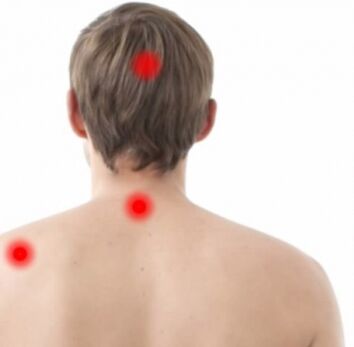
Askotan, zerbikaleko osteokondrosiarekin, nerbio txiki bat gertatzen da. Egoera hau ornoak bizkarrezur-zutabearen alde batera mugitzeak eragiten du. Desplazatutako ornoek nerbio-bukaerak konprimitzen dituzte, eta horrek odol-hodien espasmoak eta aire falta sentsazioa eragiten ditu. Oxigeno-falta luzearekin, pertsona batek arnasa eskasa izan dezake. Bihotz-taupadak azkarrak, bihotzaren eremuko mina konpresiboa, odol-presioa handitzea zerbikal bizkarrezurreko orno arteko diskoetan kalteak dituzten sintomak dira.
Trápaga osteokondrosiaren ondorioak eta konplikazioak
Orno-arterien odol-fluxu normala eteten denean, nerbio-sistema autonomoak pairatzen du. Odol-hodien espasmoak eta odol-presioaren gorakadak zorabia ekar dezakete. Zorabiatuz gero, lehen laguntzak eman behar zaizkio berehala pertsonari. Gorputza jarri behar da hankak burua baino altuago egon daitezen, honek lepoan odol-zirkulazio normala ekarriko du eta garuneko fluxua aktibatzen du. Batzuetan, zerbikal-ornoak garatzeko eta gorputza denbora luzez posizio batean dagoenean lepo zurruna luzatzeko, pertsona bat indartsu eta azkar biratzen hasten da burua ezkerretik eta eskuinera. Ondorioz, orno-arteria espasmoak sortzen dira, eta erliebe-egoera baten ordez, pertsona zorabioak, belarrietan dei-birak eta buruko min zorrotzak sentitzen hasten dira, eta horrek odol-presioa areagotu eta zorabiatu dezake.
The main and common complication of cervical osteochondrosis is the appearance of intervertebral hernias and protrusions. A herniated disc is the result of degradation and destruction of the intervertebral disc. With hernias and protrusions, compression and protrusion of the contents of the fibrous ring occurs in any direction. In this case, the person feels constant pain due to the friction of the compressed intervertebral discs against each other. The most severe complication of cervical osteochondrosis can be considered a disease - myelopathy, in which the spinal cord is destroyed. Myelopathy is most often localized in the cervical spine. Gaixotasun honekin, pertsona batek gorputzeko muskuluen ahultasuna edo tingling-a sentitzen du, ahultasuna eta nahigabeko muskuluak, mina agertzen da bularrean eta omoplaten artean.
Diagnosis and detection of cervical osteochondrosis
If you have one or more symptoms indicating the occurrence of cervical osteochondrosis, you should consult a doctor. Neurologo edo ortopedista batek pazientea aztertuko du zerbikal bizkarrezurraren mina eta mugikortasuna ebaluatzeko, lotutako sintomak identifikatu eta beharrezko diagnostiko neurriak gomendatzeko. The most reliable in our time is magnetic resonance imaging (MRI). Azterketaren ondorioz, gaixoaren %100eko zehaztasunarekin detektatu daiteke zerbikaleko osteokondrosiaren presentzia, baita irtengune edo hernia ere. Contraindications to magnetic resonance diagnostics include the presence of a pacemaker in the patient. Childhood and pregnancy are not contraindications due to the fact that MRI does not involve x-ray exposure. X izpietan ez bezala, non eskeletoaren hezurrak bakarrik ikusten diren, erresonantzia magnetikoko ehun bigunak, muskuluak, lotailuak, diskoak, lepoko bizkarrezur-muina eta nerbio-zuntzak ikusten dira. X-ray, as a method of detecting cervical osteochondrosis, is applicable only in the early stages of the disease. The advantages of this examination method are speed, accessibility and low cost. X izpiek orno arteko diskoen aldaketa-maila baino ez dute agerian utzi, lepoko ehun bigunak, muskuluak eta nerbio-zuntzak aztertu gabe.
Prevention of cervical osteochondrosis
To prevent the occurrence of cervical osteochondrosis, some tips can be listed:
- Saihestu pisu handiko altxatzea. If you need to lift something heavy, you need to correctly distribute the load across the entire spine.
- Avoid sitting for long periods in one position, avoid watching TV for many hours without changing your body position.
- The bed and pillow for sleeping and resting should be comfortable. An orthopedic mattress and anatomical orthopedic pillow, selected according to individual size, are desirable.
- It is necessary to follow rules to prevent curvature of posture. Buruaren, lepoaren eta bizkarrearen posizio zuzenak eta berdinak oinez eta eserita egonez gero, zerbikal-eskualdearen ez ezik, bizkarrezurra osoaren osasuna bermatzen du.
- Elikadura egokiak proteina elikagai, ale, fruta eta barazki ugarirekin gorputzari beharrezko bitaminak eta mikroelementuak emango dizkio.
- Gelatina, haragi gelatina, itsas arraina eta kolagenoa duten itsaskiak zure dietan sartzea, zalantzarik gabe, onuragarria izango da hezur hezur, lotailu eta kartilagoentzat.
- Ur garbi sinplearen kontsumo zuzenak eta nahikoak orno arteko diskoen edukia lehortzea eta zerbikaleko osteokondrosia agertzea eragotziko du.
- Exercise and physical activity are very important at any age. In addition to walking in the fresh air, jogging, swimming, water aerobics, yoga and Pilates are very useful.
Treatment. Lepoko osteokondrosiaren sintomak sentsazioa
To treat cervical osteochondrosis, medications, physiotherapy, massage, special exercises and gymnastics are used, and in extreme cases, surgical intervention is not excluded. Analgesics are successfully used to relieve pain. Non-steroidal drugs are indicated to relieve the inflammatory process. For muscle spasms, doctors recommend relaxants. For regular neck muscle spasms, you will need to wear a special orthopedic collar. Anti-inflammatory ointments are used to reduce pain. For sluggish cervical osteochondrosis, without exacerbations, physiotherapy procedures are prescribed. Well proven in the treatment of osteochondrosis of the neck: magnetic therapy, electrophoresis, UHF and shock wave therapy. During physiotherapy, inflammatory processes in the body subside and blood supply to the cervical spine improves. Regular massage is also indicated for osteochondrosis.
Among the exercises for the treatment of cervical osteochondrosis, 5 basic ones are widely used, performed at a slow pace. The exercises should be repeated three to five times.
- Exercise one. It consists of slowly turning the head left and right. The shoulders remain motionless.
- Exercise two. It is necessary to press on the forehead with the palm of your hand, slightly straining the neck muscles.
- Exercise three. It consists of tilting your head to the left and right, while when tilting to the left, you should lower your head as low as possible and touch your left ear to your left shoulder, and when tilting to the right, touch your right ear to your right shoulder.
- Lau ariketa. Gomendagarria da ezkerreko palmondoarekin sakatzea buruaren ezkerraldeko tenpluan, eta, era berean, eskuineko palmondoarekin sakatzea buruaren eskuineko tenpluan.
- Bost ariketa. Slowly tilt your chin towards your neck, while turning your head first to the left, then to the right.
These simple but effective exercises can be performed every day with 10-15 minutes of free time.
Ondorioa
Gure gorputzean, bizkarrezurra bost atal ditu. Trápaga bizkarrezurra arreta berezia merezi du. Sintoma konplexuak, aldibereko gaixotasun askoren presentzia eta kontrol nahikorik ezaren ondorioz, zerbikaleko osteokondrosiaren agerpena arazo larria da. Lepoan ohikoa den ondoeza arinarekin hasita, tratamendu egokirik gabe, orno arteko diskoak endekapenezko aldaketak jasaten hasten dira, pertsona bati eragozpen handiak eraginez. Zorabioak, buruko atal okzipital eta tenporaletako mina, lepoko mina, dei-hotsa eta belarrietako zarata dira zerbikal-osteokondrosiaren sintoma nagusiak, baina ez bakarrak. Trápaga-osteokondrosia gertatzeko fasean aldaketa eta ondorio itzulezinak izan ez daitezen, elikadura- eta ur-erregimenaren arau sinpleak bete behar dituzu, ariketa fisikoa egitea aldizka, zure jarrera eta buruaren posizioa kontrolatu oinez, zutik edo eserita zauden bitartean. Prolonged immobilization of the body is strictly contraindicated.